Fibonacci Recursive Memoization
Base Implementation
Looking at the recursive Fibonacci implementation below:
export const fib = (n: number): number => {
  if (n <= 2) return 1;
  return fib(n - 1) + fib(n - 1);
};
The time complexity is and space complexity of
The above function gets extremely slow when n is large due to the recursive implementation. For example asking for fib(50) will have a time of
If we visualize the implementation of the above function we will see a tree, for example for n=7:
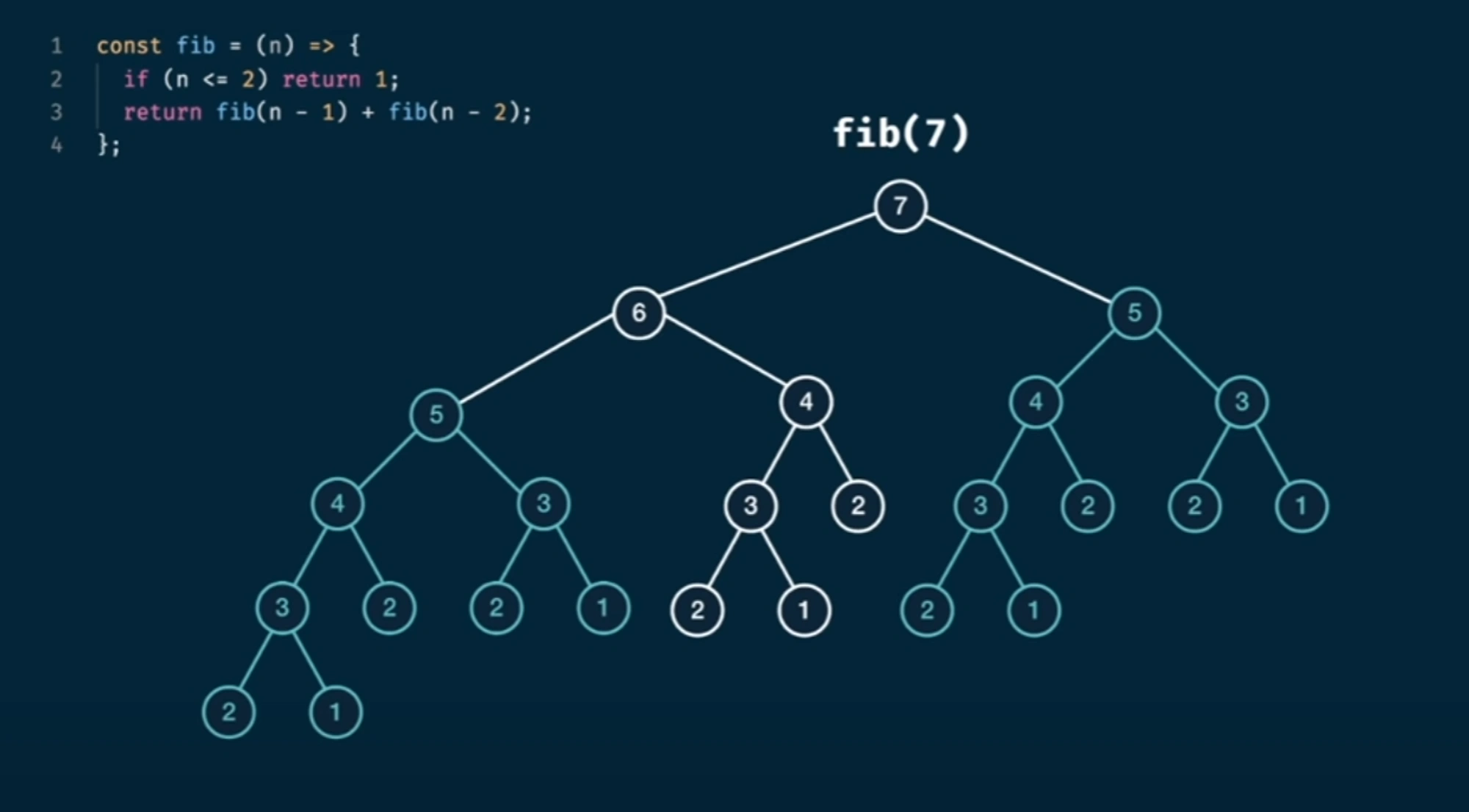
Looking at the subtrees we can see that there is a lot of data that is frequently recalculated and we can try to memoize this data
With Memoization
We can create a memo object that we pass around that will allow us to access and early escape a calculation
export const fib = (n: number, memo: Record<number, number> = {}): number => {
  if (n in memo) return memo[n];

  // rest of existing implementation with passing the memo
  if (n <= 2) return 1;
  const result = fib(n - 1, memo) + fib(n - 1, memo);

  // memoize the existing value and return it
  memo[n] = result;
  return result;
};
And now running fib(50) runs super quickly, this essentially takes the tree and collapses it into a more linear implementation and looks a bit like this:
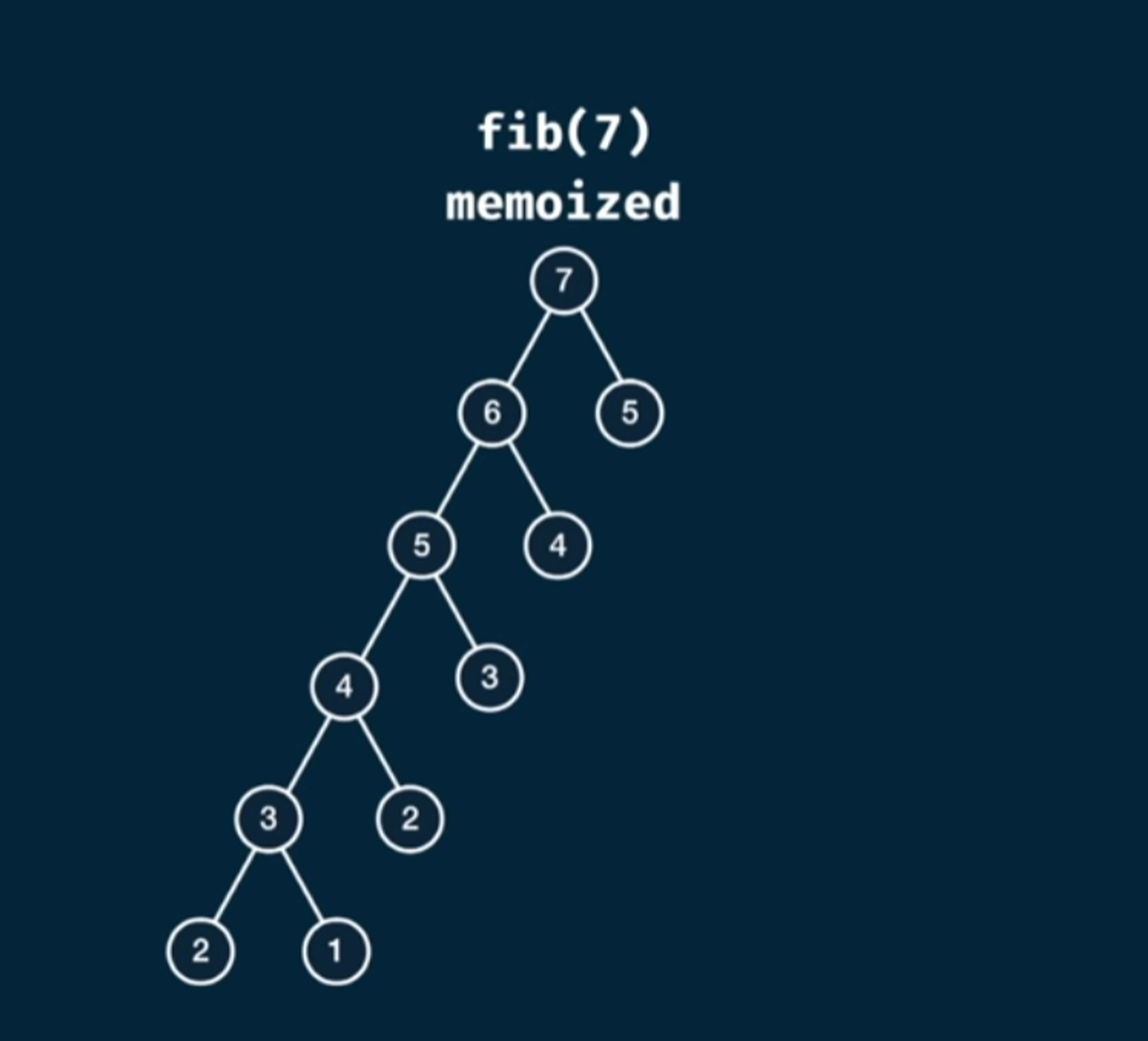
Based on this, the time complexity is now without a relevant impact on the space complexity which is still